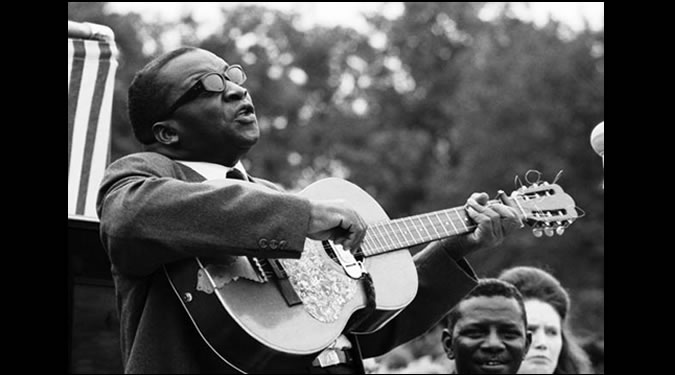
Whether he invented Mambo, laid the groundwork for Salsa or revitalized són, his contributions are undeniably seminal. This is a story of a phenomenal musician whose compositions are classics that laid the foundation for Salsa. It is a story filled with myths and half truths. This is the story of Arsenio Rodríguez.
Ignacio Arsenio Travieso Scull was born on August 31, 1911 in the town of Güira Macurijes of the Matanzas province of Cuba. He was the third of fifteen children. His parents were Dorotea Rodríguez Scull and Bonifacio Travieso; a farmer and a veteran in the Cuban War of Independence. The family were of Kongo descent , his grandfather and great-grandfather were initiates and practitioners of Palo Briyumba; giving them a strong ancestral spiritual root (more on that later).
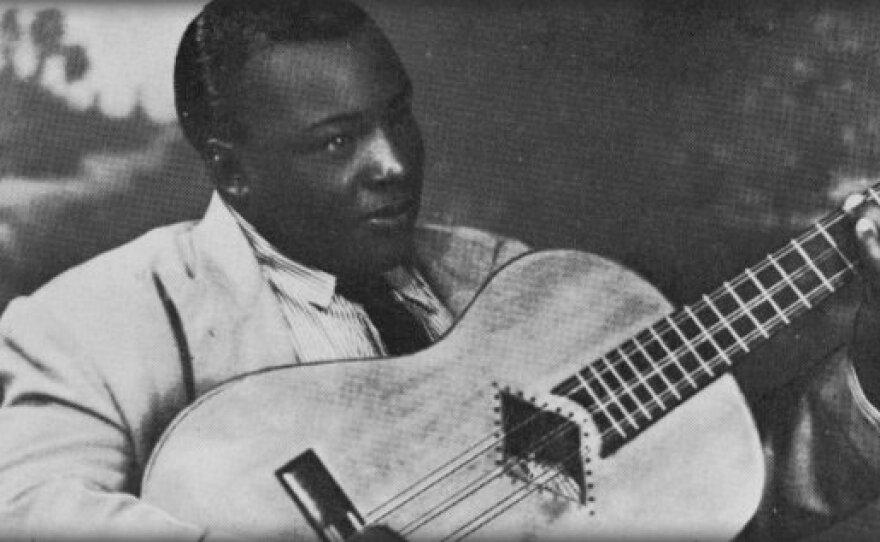
In 1915 the family moved to Güines, Cuba. In 1918, when Arsenio was 7, he was kicked in the face by a horse (or mule depending on the story) and was blinded. After this he became very close to his brother, Kike. He would dictate to Kike the song he wanted to write and Kike would write it. Their neighbor in Güines was a santero and this led to Arsenio’s immersion in the music of that tradition as well as that of his own; both influencing him later as a musician. He and his brothers started playing congas as well as the marimbula and botija (both used in traditional son cubano). During this time he took up tres, receiving teachings from master tresero, Víctor González. In 1926, after their home was destroyed by a hurricane, the family moved to Havana. Arsenio formed his first band, Septeto Boston, in 1928. The band frequently played at working class cabarets in Havana.
In the early 1930’s, Travieso, changed his stage name to Arsenio Rodríguez. During this time, sometime in 1933, Arsenio’s father died. By 1934, Septeto Boston, had been disbanded and he joined Septeto Bellamar, which was directed by his uncle-in-law, José Interián and featured his cousin, Elizardo Scull, on vocals. Four years later, in 1938, he was basically the musical director of the septet and he was becoming known by the likes of Antonio Arcaño and Miguelito Valdes. Because of his friendship with Valdés, his composition, Bruca Manigua was recorded by Orchestra Casino de la Playa in 1937 and became an international hit, the first of his compositions to do so. The recording of the band’s, Se va el caramelero, also a Arsenio composition, marks the first time Rodriguez is recorded playing tres.
Arsenio started a new band, his conjunto, in 1940. He rose to great acclaim and popularity during this time, only rivaled by Antonio Arcaño Y Sus Maravillas. He also earned the nickname El Ciego Maravilloso (The Blind Marvel) during these important years.
Arsenio traveled to New York for the first time in 1947. He hoped he could regain his sight after being told by Miguelito Valdes, that there was a doctor, called Ramón Castroviejo, who had restored someone’s eyesight. Unfortunately, he was told that his optic nerve was completely destroyed and there was no chance he could regain his sight. Just hours after this experience, he composed a song, La Vida Es Un Sueno.
Después que uno vive veinte desengaños
que importa uno más.
Después que conozcas la acción de la vida
no debes llorar.

Hay que darse cuenta que todo es mentira
que nada es verdad.
Hay que vivir el momento feliz
hay que gozar lo que puedas gozar
porque sacando la cuenta en total
la vida es un sueño y todo se va.

La realidad es nacer y morir
por qué llenarnos de tanta ansiedad
todo no es más que un eterno sufrir
y el mundo está hecho de infelicidad.
After one lives twenty disappointments
what does one more matter
After you know the action of life
you must not cry

You have to realize that everything is a lie
that nothing is true.
You have to live the happy moment
you have to enjoy what you can enjoy
because taking the account in total
life is a dream and everything goes.

Reality is born and die
why fill us with so much anxiety
everything is nothing more than an eternal suffering
and the world is made of unhappiness.
This song really exemplifies the sad truth of what Arsenio was experiencing at the time.
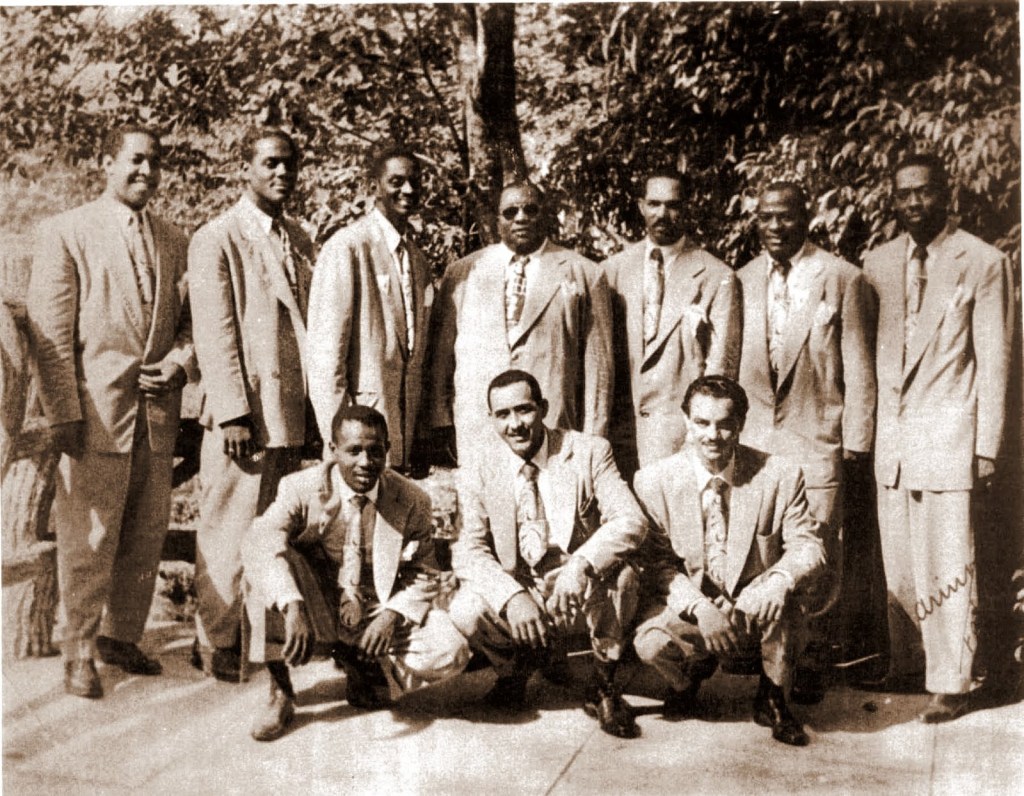
During a trip to New York, in 1950, Rodriguez stopped in Miami en route. There he experienced all the wonders of southern hospitality as he was not allowed to stay at certain hotels or eat at restaurants. The experience was so bad he never returned. Also, at the time, in Cuba, Black Cubans faced egregious racism. It was so bad, according to Mongo Santamaria, Black Cubans could not walk down the streets in certain parts of Havana after 6PM. Afro-Cuban musicians were not allowed to play at certain venues. Black Cubans were not represented on TV and often the shows would have a light skinned Latino in blackface instead of having an Afro-Latino. Arsenio and so many others were living in a society where they were essentially being oppressed by their own people.
Arsenio returned to New York two more times before settling there in 1952 leaving his conjunto under the leadership of legendary trumpeter, Felix Chapottin. Chapottin continued to lead the orchestra until his death in 1983. Arsenio’s last trip to Cuba was in 1956.
Gabriel Oller, recalled this of Arsenio
He was always searching for a new sound and never forgot the people who were kind to him. He would always mention their names in his recordings. He immortalized Luis Cora, a Bronx barber, in a son montuno, because Cora always cut his hair free of charge. […] Arsenio Rodriguez is the best musician to ever come out of Cuba. No one will ever top the legacy he left us.
Mambo Kingdom: Latin Music In New York by Max Salazar pp. 24-25
Johnny Pacheco, who worked with Rodriguez when he was just 19 years old, remembered Arsenio’s incredible sense of rhythm.
Imagine what an ear El Ciego Maravilloso had: his pianist at the time, Ray Coeña, was always trying to find time to push up his glasses since they’d slide down all the time. Arsenio realized what was going on, and when the time came he’d tell him, ‘push up your glasses’. If that’s not a sixth sense for time and rhythm I don’t know what is.
Faces of Salsa: A Spoken History of the Music by Leonardo Padura Fuentes pp.56
Rodriguez taught Pacheco much about authentic Cuban music and how to play it. The influence is evident when we listen to Pacheco’s later recordings with his band Pacheco Y Su Nuevo Tumbao. He would even show up at Pacheco’s gigs when he formed his charanga and sit in with the band.
Arsenio was the first Cuban musician to greet Rafael Cortijo Y Su Combo when they first travled to New York’s famed Palladium Ballroom. The popular song A Bailar Mi Bomba was written by Rodriguez for Cortijo.
While he was a proud Afro-Cuban, Arsenio understood something important…the heart of this music, whether it’s from Puerto Rico, Cuba or the Dominican Republic, comes from Africa. Aurora Flores simply stated, “He was a Pan-African”. She also shared an anecdote she heard from Dominican sonero Santiago Cerón, in a recent conversation I had with her. She recounted that Cerón had started out as a bolero singer in the late 60’s and one day Arsenio and his brother Kike walked into the establishment he was singing at. Arsenio asked to speak with him and asked him if he had ever sung as a sonero. Cerón replied that he was not Cuban, but Dominican. Arsenio laughed and replied, “you’re black!” Cerón later started singing as a sonero with great success. This story truly exemplifies Arsenio’s mindset, he knew this is all of our music.
Arsenio’s Innovation
Arsenio’s work is so seminal because of his remarkable innovations. Originally, the Son Cubano bands included a maracas player, bongos, a trumpet and two guitars. He revolutionized the format by adding a piano, congas, horns and three trumpets. He also started using written arrangements for his conjunto. He also accented the montuno section. His innovations created a rhythmically stronger, more complex Son and revitalized the music that was slowly becoming obsolete after its popularity in the 1920’s and 30’s.
In New York, Arsenio enjoyed success for some time, but the changing tides of Latin Music in the 60’s left the virtuoso and beloved bandleader obsolete. The youth of the time was entranced by the Boogaloo and Latin Soul crazes and the mambo era was dying. Songs like Watermelon Man, Subway Joe and I’ll Never Go Back To Georgia were the “in” trend.
Sadly, Arsenio died on December 29, 1970. He was just 59 years old. But the story doesn’t end here…While Arsenio became obsolete as a performer during the 60’s, his compositions were still as hot as ever. Here’s where the controversy comes into the picture…
The controversy
There is a large controversy surrounding Arsenio’s economic situation in his later years. Some say he died poor, others dispute this claim. According Ralph Mendez, who kindly took the time to talk to me and straighten out the facts surrounding Arsenio death, this was all a lie. Mario Bauza, also backs up this claim, saying Arsenio made a ”modest income from his royalties”.
Perhaps the saddest part is that, when Rodriguez died, he was buried without a headstone and his grave was unkept and abandoned. It is a topic that is surrounded with half truths and controversy.
I spoke to Ralph Mendez and Aurora Flores; who were both instrumental in getting Arsenio a headstone, about the issue, as I was constantly running into conflicting storie in my research about Arsenio. They were able to tell me the following:
In his later years Arsenio was married to a Dominican woman, Anadina Rodriguez. She insisted he be buried in New York. He was, however, she somehow forgot all about getting him a headstone. Her children, Arsenio’s stepchildren, didn’t get the headstone for him either. It all boils down to family oversight and neglect. Kike, who took care of his brother, couldn’t do anything about this because Anadina held the deed to the plot.
Fast forward to 2012 and Ralph Mendez investigated into the situation and discovered that Arsenio didn’t have a headstone. He was able to locate the grave and started the process of getting him a headstone. There was only one problem, he couldn’t legally do it because he wasn’t related to Rodriguez. An article was published in the NY Daily News about the situation. Two of Anadina’s children came forward and gave permission as they now held the deed. Larry Harlow paid for the headstone. Finally, 43 years after his death, Arsenio had a headstone.
Mendez also shared with me that Rodriguez actually converted to christianity and became a Pentecostal in his last years, after moving to California.
I also want to note, there are rumors circulating that it was Kike’s fault that he did not have a headstone. This is just one of the many half truths and rumors that circulates about Rodriguez.
The question of Mambo
There are several purported inventors of Mambo: The Lopez Brothers (Israel ‘Cachao‘ Lopez and Orestes Lopez), Arsenio Rodriguez and Perez Prado. Let’s address each of these claims. Israel and Orestes Lopez wrote the song Mambo in 1938, while they worked with Arcaño Y Sus Maravillas. The song was a danzon with the rhythmic backbone of the congas supporting it. It became known as a Danzon de Nuevo Ritmo. In my opinion, it is most erroneous to claim the Prado is the inventor of the afro-cuban music and dance craze that lasted some 20 years. Tito Gonzales said, “Arsenio Rodríguez created mambo and Pérez Prado made the money”, and that’s how we can most simply state it. It is now more widely recognized that Prado profited off and popularized the genre, but did not develop it. We can not decisively say who developed the genre. Personally, I think, that Mambo was simultaneously developed by several artists, including Cachao, Orestes Lopez and Arsenio. We can see it as a spirit (in this case music) being incarnated that presented itself if several different ways through the minds of several gifted musicians. What is certain is that the infectious music and dance traveled the world and ruled for two decades.
Consciousness and Religion in His Music
Another point worth mentioning for me is Arsenio’s consciousness that is present in his music. In one song he wrote, he writes, “I was born in Africa. My name is not Rodriguez. I don’t know my name.” This, for me, shows three things;
1. Arsenio was conscious of who he was as an Afro-Cuban and his roots
2. When he says “my name is not Rodriguez”, he is effectively rejecting a name associated with colonization. Rodriguez is of course a Spanish surname.
3. When he writes, “I don’t know my name”, we must look the history of slavery to fully understand its full message. What he means by this is that he does not know his Kongo name because of slavery. If you do not know your name, you do not know who you are. Arsenio felt lost in a society that did not see him.
In addition to his social consciousness, Arsenio often included references to Palo Briyumba in his music. For example in his composition, Dundumbanza, he says “con licensia briyumba”, invoking the briyumba line of Palo. Hachero Pa’ Un Palo also references the Kongo Caribbean tradition. This was a bit unusual for it’s time as initiates of the tradition were not very likely to “publicize” their involvement. Most songs that reference an Afro-Caribbean tradition, reference Lucumi and less commonly, Abakua.
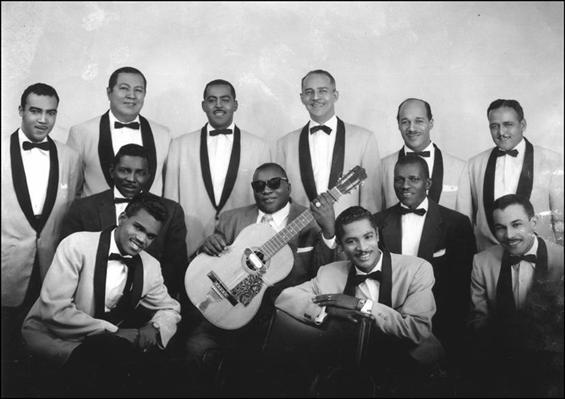
Arsenio Rodriguez was a seminal figure who changed the face of Latin music forever. A true maestro of music and a storyteller who chronicled our experiences. He was a visionary and a phenomenal virtuoso. He was a revolutionary bandleader and an innovator. We must always remember him and be grateful for the astounding legacy he has left.
SPECIAL THANKS TO:
Aurora Flores and Ralph Mendez. Aurora kindly explained what she knew of Arsenio’s death and the controversy surrounding his headstone, as well as sharing the contact of Ralph Mendez, who was able to explain the situation in further detail. Many, many thanks to both of them for their help in writing this article.
 Voice of the Water Lily
Excelente trabajo. Mis mas sinceras felicitaciones, la música es esencial y aun mas su historia, Nos identificamos a través de ella, entendemos de donde venimos, por qué nos llama la atención este tipo de música, a algunos, claro, Nos ayuda a redirigirnos. a apreciar lo que mucha gente hizo en el pasado y lo que están haciendo ahora. No sabía mucho de Arsenio, sino lo poco que escuchaba en las canciones. Pero este trabajo me dio muchas luces. Aprecio grandemente nuestras raices.
LikeLiked by 1 person
Muchisimas gracias por tus maravillosas palabras!
Anani
LikeLike