
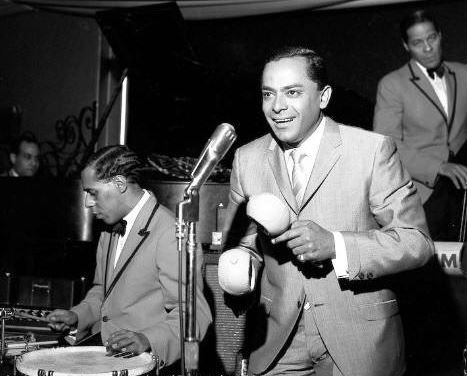
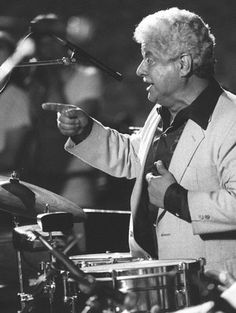
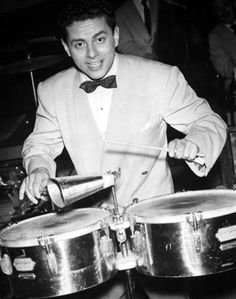
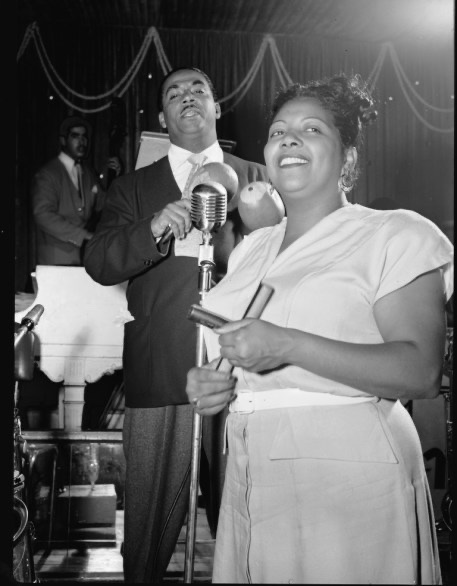
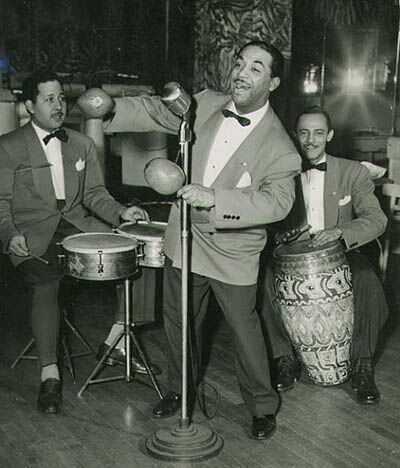

The 1940’s and 50’s were filled with the rhythms of Mambos, Cha-Cha-Cha’s, Boleros and more. The first musicians to bring Cuban rhythms to New York were Mario Bauza and his brother in law Machito Grillo in the late 30’s. At first Bauza, a trumpter, oboeist and saxophonist worked with jazz bands such as Chick Webb’s Orchestra. Bauza is even credited with discovering Ella Fitzgerald and Dizzy Gillespie. However after Bauza played Cuban music for the jazz musicians and was called a “hick”, he formed Machito and his Afro-Cubans, a revolutionary band for the time. Not only was it combining Cuban music with Jazz, but also proclaimed pride for being Afro Cuban, unheard of at the time. The large orchestra played latin jazz, mambos and other rhythms, in fact many great musicians started out playing in the Afro-Cubans. Tito Puente started working with the Afro-Cubans at the age of 13. Puente deeply respected Machito and said he was like a father to him. Tito Rodriguez also worked with Machito when he was starting out. It is vital to mention the Palladium when talking about the Mambo Era. The ballroom started out as a whites only establishments, however due to the fact that the ballroom was financially sinking and genius promoter Frederico Pagani, the Palladium became “Home of the Mambo”. The ballroom was said to have some of the best mambo dancers in the world, such as the dancing sensations the Italian Milly Donay and Puerto Rican Pete Agilar, better known as Cuban Pete and Milly.
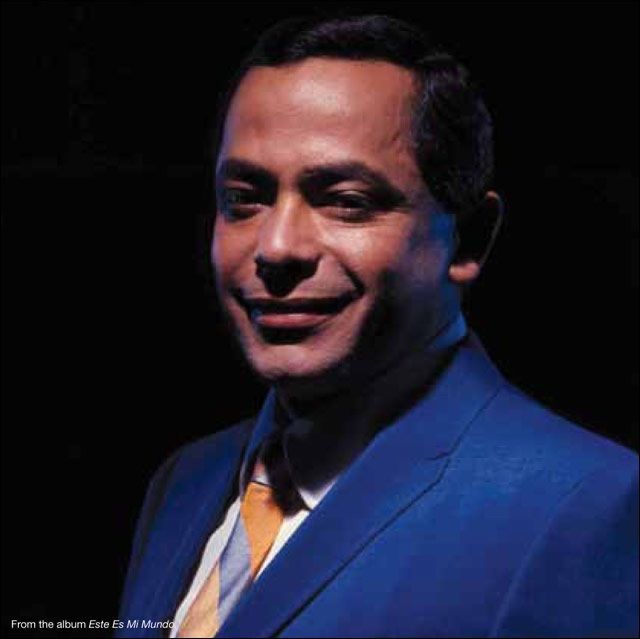
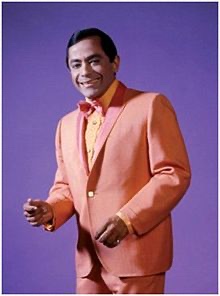
Tito Puente and Tito Rodriguez were huge stars of the Mambo Era. Other big names were pianists Joe Loco, Noro Morales and others. Tito Rodriguez was known for not only his Mambos and Cha-Cha’s but also for his romantic Boleros. Both Titos’ and Machito remained popular until their deaths, (Rodriguez’s in 1973, Machito’s in 1984 and Puente’s in 2000), unfortuneatly this fate was not shared by all musicians of that Era as new trends made them irrelevant to the youth. The Mambo era remains an amazing era of music, culture and dance
 Voice of the Water Lily