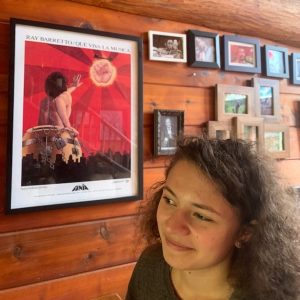
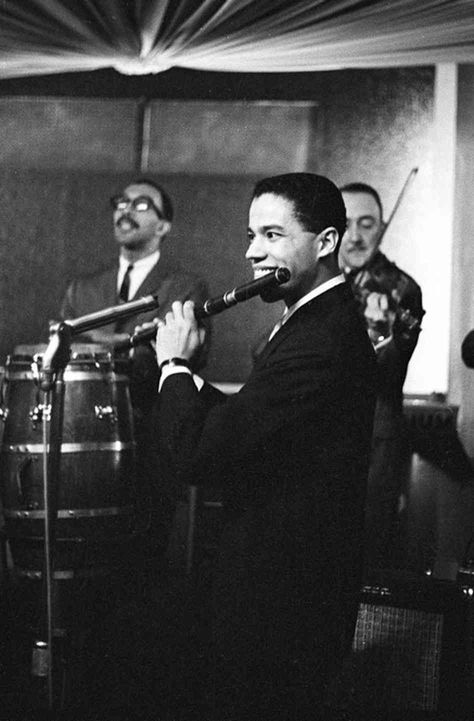
The 60’s were a time of many movements, from civil rights to music, The Young Lords, Black Panthers Joe Cuba, Joe Bataan and more! The 60’s were also a time of many different trends in Latin Music. Young Latinos, more specifically Puerto Rican youth were turning away from their parents music, this led to the development of the Boogaloo, a mixture of Latin Rhythms, English or Spanglish lyrics, Doo-wop and other non latin influences. The Charanga was also a popular style of the 60’s, as it transformed from the music of the cuban elite in the 30’s and 40’s to a dance trend modernized by Johnny Pacheco, Charlie Palmieri and others. Joe Bataan’s fusion of Latin Music and Soul was incredibly popular with the youth of the time. Joe Cuba’s ‘I’ll Never Go Back To Georgia’ and ‘Bang Bang’ were great examples of the English language trends, while he also performed traditional rhythms with a new take starring the great Cheo Feliciano, illustrated in the songs ‘Salsa Y Bembe’ and ‘Como Rien’, a modernized bolero for the times. Eddie Palmieri’s ‘La Perfecta’ modernized Charanga into a form they called ‘Trombanga’, Charanga with trombones instead of violins! Palmieri’s records featured traditional rhythms and sometimes lesser known ones, like the Mozambique with modern twists.
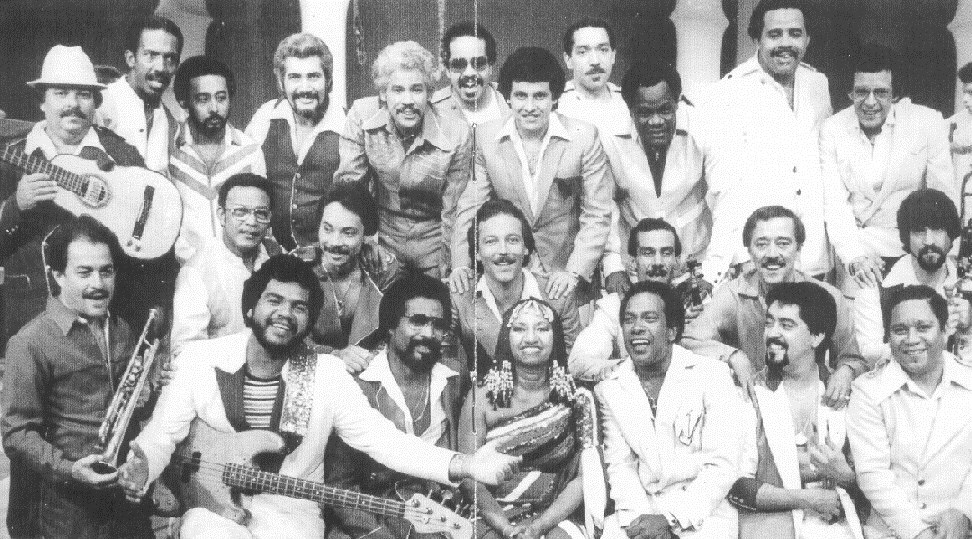
With the 70’s came Fania and Salsa. Salsa fused Cuban rhythms, mostly Puerto Rican musicians, new elements from various prior trends and non latin influences. One of the best examples of real salsa is the great supergroup of the best latin musicians of the time, the Fania All Stars. Salsa was a movement some of the elders did not take kindly to. They felt that it was grouping all latin music together and did not see it as a new trend, but the same music they had always been playing. Tito Puente often responded the term by saying “gravy” or “ketchup”, sometimes even saying “I am a musician, not a cook”. Some, such as the great Machito Grillo, changed their opinions as illustrated in Grillo’s song ‘Soy Salsero’. Salsa later disintegrated into the soft and non instrumental “salsa” known as ‘Salsa Romantica’ of the late 80’s and 90’s. This music lacked instrumentation and focused only on the singer. Sadly the state of Latin Music/Salsa today has become vocalist centered and boring. And semblance of consciousness and social/political message has dissappeared from most mainstream Latin Music, (of course this is with exceptions, such as the great Ruben Blades who continues to write politically, socially and historically conscious songs.




 Voice of the Water Lily