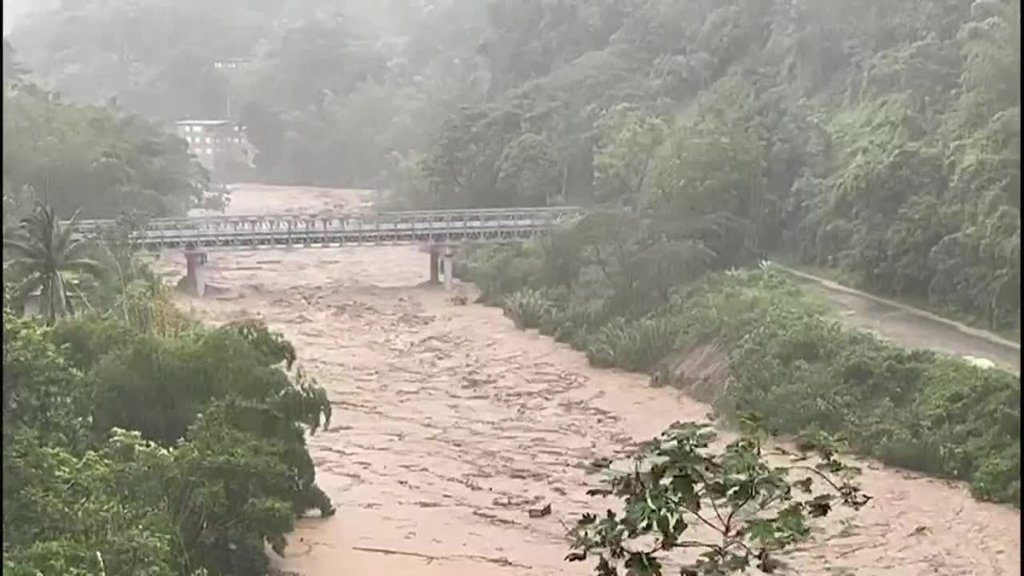
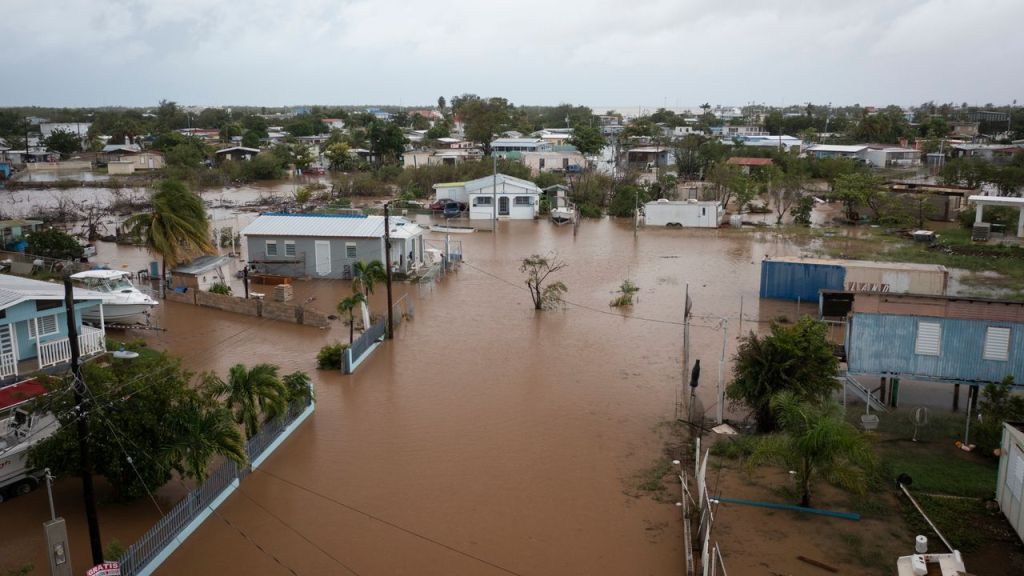

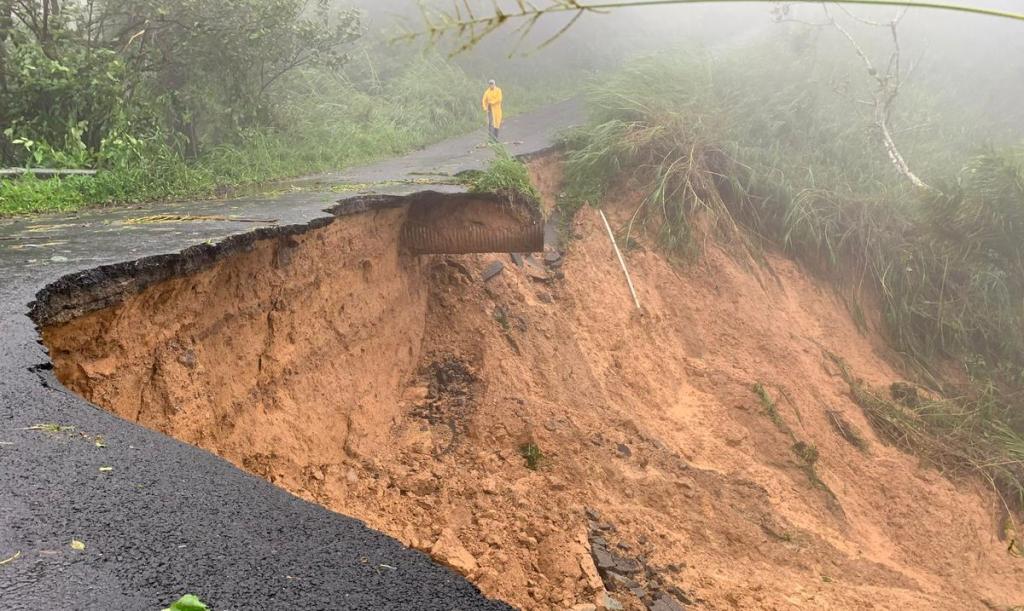
These photos are tragic and alarming, people have lost so much, their homes, their livelihoods and some have even lost their lives; to them, we send our deepest condolences.
However what concerns me very deeply is, Puerto Rico’s topsoil coloring the waters that raged throughout the island earlier this week. Those waters tell another story that is rooted inside of colonialism and environmental degradation.
To fully understand how this natural disaster connects to colonialism we have to travel back, way back to when Columbus and his bandits washed up on our shores on Nov 19, 1493. These conquistadors had no understanding of nor respect for the soil of Borinquen. They didn’t understand the value of the Taino people’s reverence for the Earth that sustained them or their method of subsistence farming and diversified agriculture that allowed the landscape to absorb hurricanes more easily. The Taino understanding of life cycles, patterns of growth and decay and knowledge of the ecology is encoded in the Taino mythology and deities (Zemis) themselves. The spaniards on the other hand, had no connection to or love for the land; only looking for what they could take, particularly gold. That basic story did not change over the next 500 years.
In 1898 Puerto Rico was invaded by the United States. While land can be exploited by any agriculture, the vast monocultures implemented by the United States were catastrophic for Puerto Rico’s delicate ecology. Furthermore, tropical soils are easily depleted and highly erodable; meaning they are not suitable for plowing. Since the best agricultural lands are the flat lands below the hills and mountains, these were quickly taken over by US corporations, pushing Puerto Ricans into marginal lands. This then led to erosion and overgrazing of the hills, which then lead to exactly what we see happening right now; soil washing down off the hills, into the rivers.
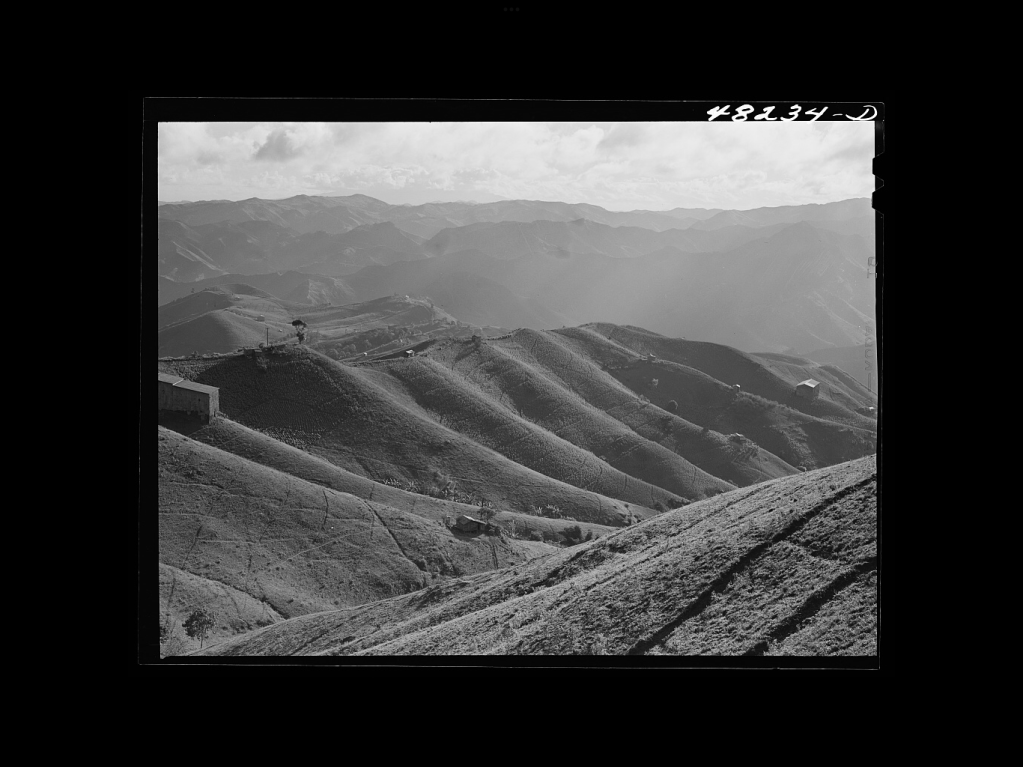
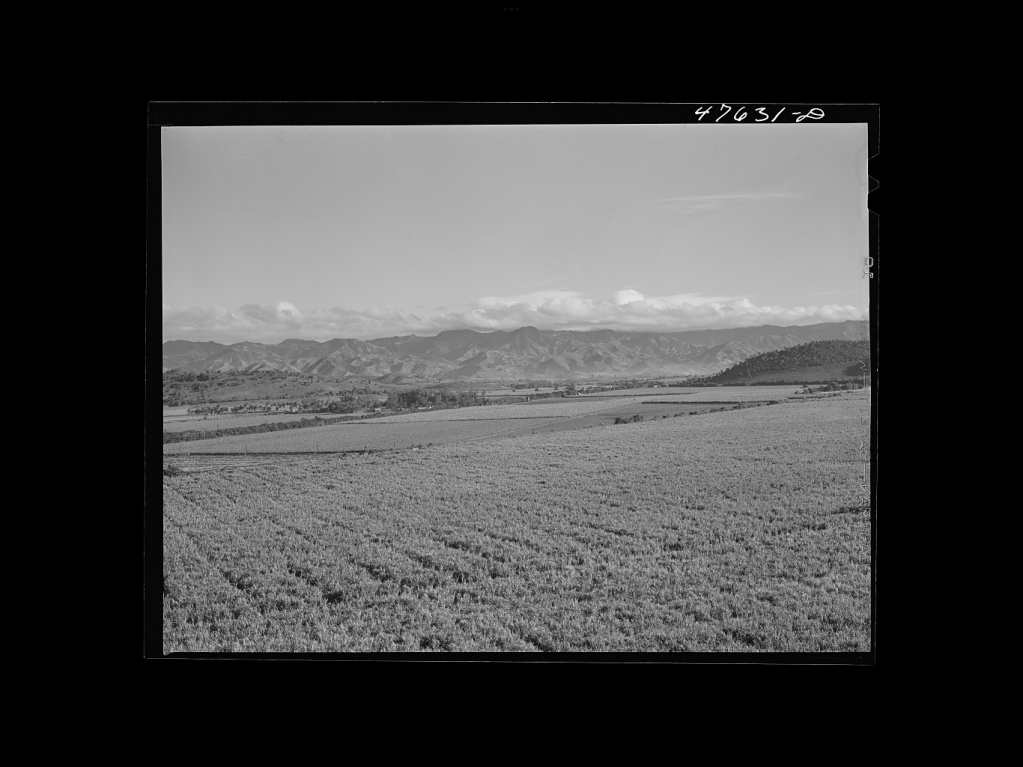
However, upon American invasion, many Puerto Rican jibaros farmed small plots using many of the same agricultural practices as the Taino, though in a colonial situation, they maintained this important form of autonomy. This did not suit the agendas of US corporations such as American Sugar Refinery (ASR) who wanted to take over the land. The perfect opportunity came the following year when Puerto Rico was ravaged by Hurricane San Ciriaco. The storm destroyed almost the entire coffee crop and thousands of small jibaro farms, killing 3,369 people. US appointed politicians on the island quickly took advantage of the situation passing bills such as the Foraker Act (1900) and The Hollander Bill (1901), while US appointed governor Charles Herbert Allen would block hurricane relief for the farmers forcing them to take out loans. Allen went on to lobby for ASR on Wall street, then became the company’s president and as the company’s CEO eventually controlled 98% of Puerto Rico’s sugar.
But that wasn’t all, because of the newly passed Hollander Bill, usury laws did not apply on the island, meaning that banks could make interest rates as high as they wanted to. When the farmers inevitably defaulted on their loans, their land was seized. This mass separation of Boricua’s from their land precipitated devastating ecological damage and poverty. These Puerto Ricans, now landless, worked for starvation wages at US owned sugarcane refineries. The lands they were pushed onto were marginal lands in the hills that were quickly overgrazed and eroded.
Meanwhile, the Foraker Act stopped the island from negotiating trade treaties, tariffs and import/export regulations. Between 1897 and 1930 Puerto Rico’s trade with the United States rose from 19% — 94.3%. It also caused prices on the island to be 15% higher than on the mainland. To add insult, on top of it all, many goods were defective.
In 1900, Instead of hurricane relief Puerto Ricans lost 40% of their savings overnight when the US outlawed and artificially devalued their pesos by 40%.
In 1920 the Law of Cabotage (better known as the Jones Act) was passed saying that all goods entering Puerto Rico had to come on a US ship. This many times meant unloading goods from one ship and reloading them onto an American ship. Between 1970 and 2010 it is estimated this cost Puerto Rico 29 billion dollars.
In 1922 the Supreme Court declared Puerto Rico was a territory not a state; meaning the constitution did not apply there. The same year congress denied a minimum wage act on the island. A minimum wage act was not signed into law on the island until September 21, 2021.
Independence movements and any attempt at social reforms were violently crushed. When Pedro Albizu Campos lead the impoverished and forgotten agricultural workers of Puerto Rico on strikes in 1933-34 he found himself under constant surveillance, receiving constant death threats until he was eventually arrested and accused of sedition. It happened to him again when he ordered uprisings to fight US rule on the island in 1950.
Every single one of these actions illustrate the toxic, abusive and predatory relationship the United States has with Puerto Rico.
There was a big lie told to Puerto Ricans, one that has been repeated around the world time and time again; “The United States is going to bring industry and democracy”. The democracy that was brought to Puerto Rico was blatant human rights violations, brutal crackdowns on independence movements, senseless massacres of peaceful protesters and medical experiments. Meanwhile the industry destroyed the ecology of the island. It was like giving someone a job that burns down their house. Pedro Albizu Campos saw it quite clearly, “the mercantile monopoly destroyed agriculture”. The destruction of sustainable and diverse agriculture in Puerto Rico didn’t just hurt the ecology, it embedded a deep wound into the Puerto Rican psyche. A healthy society cannot be built on exhausted and exploited soil, and the reeling economy of Puerto Rico is evidence of that. A healthy economy cannot be created without a healthy ecology.
My father vividly recalled fishing with his uncles in Puerto Rico in the 60’s. He remembered the fields of coconut palms and bulls that they had to run through, the places where the river and ocean met. He told me about the time he stepped on a sea urchin and how his uncles knew where to find clean water in the rocks. He remembered the sacks of fish that they would bring back to Tia Eva. Twenty years later he returned to a decimated ecology, like a scene from ‘Silent Spring’. When he asked his uncles what happened, they told him the sugar company had thrown toxic waste in the river. This tragic scene was repeated throughout the island countless times in various different forms. With the agricultural land exhausted, American pharmaceutical companies found a way to profit taking advantage of tax breaks. Similarly in recent times, Law 22 has made it easy for American millionaires to evade capital gains taxes on their cryptocurrency by moving to Puerto Rico.
In 2016, PROMESA implemented austerity measures on the island; the fiscal control board was reminiscent of the direct colonial rule of the 40’s. It showed just how much colonial scorn Puerto Rico is still seen with. The fiscal control board was equivalent to the idea that Puerto Ricans were like “children” who needed their property “managed”. What came next uncovered just how broken the system was. Hurricane Maria was a very unnatural disaster as Naomi Klein wrote in her 2019 book “On Fire”
“Those deaths were not the result of an unprecedented “natural disaster” or even “an act of God”, as we so often hear. […]God isn’t the one who laid off thousands of skilled electrical workers in the years before the storm or who failed to maintain the grid with basic repairs. God didn’t give vital relief and reconstruction contracts to politically connected firms, some of whom didn’t even pretend to do their jobs. God didn’t decide that Puerto Rico should import 85% of it’s food—an archipelago blessed with some of the most fertile soil in the world. God didn’t decide Puerto Rico should get 98% of its energy from imported fossil fuels—these islands bathed in sun, lashed by wind and surrounded by waves, all of which could provide cheap and clean renewable power to spare. Those decisions were made by people working for powerful interests”
—From “On Fire: the Burning Case for the Green New Deal” by Naomi Klein
“Puerto Rico has provided perhaps more wealth to the United States than perhaps any other country in history”, writes Juan Gonzalez, yet the people of Puerto Rico are poorer than those in the poorest US state. They are underpaid and overcharged; exploited and abandoned; used and forgotten.
To put it simply, Puerto Rico has been left with illegal and illegitimate debt and a cleanup job. Puerto Ricans were displaced, their land exploited and then blamed for the mess left behind. The tragedy of Hurricane Maria and now the tragedy of Hurricane Fiona are not simply natural disasters, they are the result of centuries of colonialism and environmental degradation that have created a recipe for tragedy. I can only affirm that from these tragedies will plant inside the people of Puerto Rico a will to return to the Earth. I affirm that Borinquen will see sovereignty; not just politically; but spiritually and this cannot be accomplished if people are separated from the Earth that sustains us all.
 Voice of the Water Lily
Thank you for this article. My heart hurts!
Jackie Amatucci
LikeLiked by 1 person