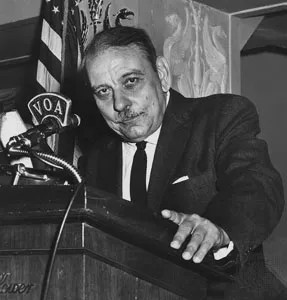
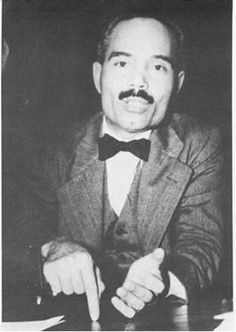
Luis Munoz Marin rose from being, in all estimations, one big failure to being a senator and later the governor of Puerto Rico. It was quite a feat, but what he did with his newly acquired power was another story. Marin declared martial law to quell the 1950 Nationalist uprisings, had two towns in Puerto Rico bombed by P47 Thunderbolt warplanes, used carpetas to spy on and convict innocent people, only guilty of not supporting him, and even enacted the 1948 Gag Law preventing Puerto Ricans from the ”crime” of possessing their flag. But why would the first Puerto Rican elected governor of Puerto Rico, who had once demanded Puerto Rico’s freedom, do this to his own people?
Luis Muñoz Marin was born of February 18, 1898 to Luis Muñoz Rivera and Amalia Marin Castilla. Munoz Rivera was a prominent politician at the time, so much so, that he’d been in Spain days before Luis’s birth presenting an autonomy plan for Puerto Rico which was accepted by the Spanish government. Just 5 months later, the United States invaded Puerto Rico. Muñoz Rivera also founded two newspapers; El Diario and La Democracia.
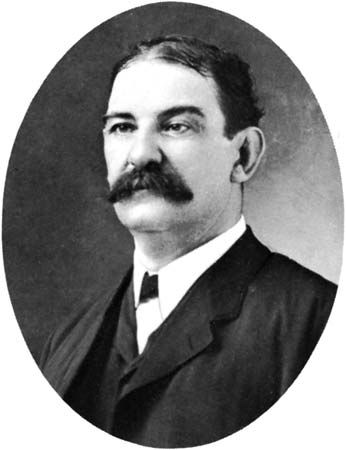
In 1901 El Diario’s offices were vandalized and the family moved to Caguas, Puerto Rico and later relocated to New York. The family often travelled between Puerto Rico and New York, something Luis would do throughout his life. In 1904 they returned to Puerto Rico and Muñoz Rivera quickly founded the Union Party, which quickly won the elections, with Rivera elected to the House of Delegates. Rivera also lobbied for large corporations working in Puerto Rico, all the while still claiming to be an independista. Young Luis was enrolled in William Penn Public School and quickly skipped grades because he spoke English. While he was a bright student at first, he began failing tests. Coincidentally, at the same time, Luis’s father fully threw himself into politics; making no time for his family.
In 1910 they moved again, Rivera moved to Washington DC for his new job; Resident Commissioner while Amalia and Luis moved to New York until Rivera insisted Luis come to DC. There he enrolled Luis is Georgetown Preparatory School. There he continued his terrible trajectory, failing every single class except one, dropping out in 1914 and moving back to New York with his mother. Meanwhile, Muñoz Rivera returned to Puerto Rico to campaign for his reelection. During this time, Luis spent his time frequenting seedy establishments and developing what would become a lifelong opium addiction. This fun was soon over when Muñoz Rivera forced him to return to Washington DC, retake his final exams and enroll in a Law Program. Again, he passed just one class in the whole course. Soon after, Muñoz Rivera would return to the island and die at just 57 years old from a gallbladder infection and rupture. To make matters worse, he was up to his eyeballs in debt, and even the newspapers were reeling. Muñoz Rivera’s associate, Eduardo Georgetti resurrected what was left of ‘El Diario’ and ’La Democracia’, giving Amalia a house and a reasonable income from the newspapers.
Despite this, Luis returned to New York with his mother, refused to go to law school as per his father’s last wishes and became intrigued with Greenwich Village. The next 15 years can only be described as lunacy. Muñoz Marin wrote a play about a morphine addict (it sold 1 ticket), started 3 magazines (that all failed), got married and had 2 children with Muna Lee who he routinely abandoned, relied on his mother and wife to support him and fell into a deep vortex of opium addiction.
In an attempt to make money and support his habit, he started a Greenwich Village tour. He would lead a group around the village, visiting “businesses”, and then drop them all off where it started, Washington Square Arch. From there he’d visit his favorite opium den and many times blow all the money he had made with the tour that night very night. He was also known to disappear for months on end. On one such occasion he told Muna he was going to buy cigarettes; he didn’t come back for 3 months. He restarted the tour at another point with an insane man who went by Joe Gould, however, even he tired of Luis’s antics and said he was “too irresponsible”.

In search of a new way to make money, he returned to Puerto Rico claiming he would be compiling his father’s writings into a book; he even raised $5,000 for the project. The money promptly disappeared and no such book was ever produced. Throughout this time Muna constantly sent letters asking for financial help. And soon after, his mother refused to give him any more money after he burned through the equivalent of over $8,000 in two months. In 1927, he again abandoned his wife and kids, this time in Puerto Rico while he returned to Greenwich Village. There he was struck with a brilliant new business idea and tried to enlist the help of Robert Clairmont (a man famous for throwing three-day long parties). Luis wanted to turn San Juan into the next big tourist destination; this of course failed as well. He continued to spend all his money on opium. Now, in a complete financial disaster, he moved back to Puerto Rico and moved himself, Muna and the children into his mother’s house. There he spent his time growing opium poppies in the field behind her house.
After realizing that many people on the island still had great respect and admiration for his late father, he decided to try his hand at politics. After all, what did he have to lose? He often made impassioned speeches about Puerto Rico’s need for independence. Sometimes he even went as far as to ride into small jibaro villages on a donkey wearing a pava. He won the 1932 election where he ran against PNPR leader, Pedro Albizu Campos. Luis’s popularity among Puerto Rico’s impoverished jibaros soared to an all-time high and he soon became the most popular and powerful politician in Puerto Rico. He seemingly resurrected himself from failure to senator! Then strange things started happening to Luis.
When US Senator Millard Tydings introduced a bill that would grant Puerto Rico independence, Muñoz Marin did the unthinkable; he lobbied and voted against it, the only politician in Puerto Rico to do so. And it didn’t stop there, Luis travelled to Washington not just one, but two times to advocate against the bill that would have delivered his number one campaign promise. He even touted a US government talking point: “The island isn’t ready for self-rule”. What was behind this puzzling behavior?
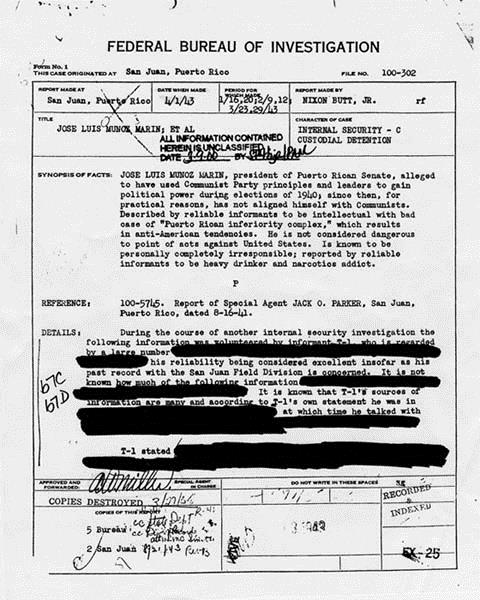
The carpeta (Carpetas contained secret police dossiers that included a realm of personal information) seen above was used to control him. However, the investigations into Muñoz Marin had started 3 years before this bombshell report was filed. The earlier reports stated the following:
- He has no profession
- He is absolutely financially irresponsible, never has money in his pockets and never thinks of his responsibilities
- Has not contributed to the support of Muna Lee [his wife} or his two children
- He was a deadbeat philanderer
- He had been a member of 4 different political parties during his political career
- He was utterly unprincipled and has no ideals whatsoever
- He was a heavy drinker who would go on “protracted drunks” from anywhere from 2-3 days to 2-3 weeks. The reports also stated he refused to eat unless his friends forced him to when he was on these protracted drunks. He had been seen in public in a drunken condition. He was also know to “sweep all the drinks off the table” and was later so drunk he could scarcely walk.
- He owed El Escambrón $650, and he tried to settle the issue by claiming he would give them a tax deduction of the same amount. There was an outstanding bill from El Condado for $300, and another with RCA for $200
On April 1, 1943, the report seen above was filed and stated that “Muñoz Marin was a narcotics addict”, something that had been rumoured for a long time, but Marin vehemently denied. With this newfound information, the FBI went in like vultures circling a corpse. They laid down the law: do what we say, or we’ll disgrace you in front of the whole island and your political career will be over in a flash! The next day, Muñoz voted against Sen. Tydings’ bill, even though it contained the exact provisions Marin had demanded in various articles he publicized in ‘La Democracia’. In just 3 years, Muñoz Marin would go from demanding independence to opposing it. His behavior only got worse from there.
When Don Pedro Albizu Campos returned to Puerto Rico after serving a 10-year prison sentence in Atlanta on December 11, 1947, Luis had a present for his old opponent. Luis had been working on getting Law 53 passed, speaking in support of it in the Senate and eventually convincing the governor, Jesus T. Piniero to sign it.
Law 53 known as El Ley de la Mordaza (the Gag Law) made possession of a Puerto Rican flag, even inside your house, singing or whistling of La Borinquena, or other patriotic/revolutionary songs and any speech, article, or statement that was pro-independence or was against the US, illegal. Even saying ‘Que Viva Puerto Rico Libre’ was illegal. Groups of people coming together who supported independence…also illegal. It allowed the police to detain, stop and harass people that were suspected to be nationalists or had family members who were nationalists.
Munoz Marin’s corruption soared to new levels when he used the law to imprison people who didn’t vote for him. The penalty for breaking the law was a $10,000 fine and or 10 or more years in prison. This allowed Munoz Marin to imprison thousands of Nationalists or people who didn’t vote for him with absolutely no due process. Some were imprisoned for up to 20 years.
Nelson Denis put it quite simply in his incredible book, War Against All Puerto Ricans:
“By 1948, Muñoz Marín’s transformation into US puppet had been complete.”
The next year, in 1949, Luis was rewarded for his obedience and became the first democratically elected Puerto Rican governor of Puerto Rico. He also legally divorced Muna and married Inez Mendoza who quickly took over decorating La Fortaleza with expensive artworks and artifacts. Muñoz also had a radio show, a printing press and a newspaper…business was good. Damn selling out really paid well, didn’t it? However, his drug and alcohol use was starting to show, and soon dark circles were a permanent presence under his eyes. Other than that, life was good, at least for a little while.
On October 30 1950, Raimundo Diaz Pacheco jumped out of a car and sprayed submachine gun fire into the second-floor windows of La Fortaleza. Muñoz Marin hid under his desk as bullets rang out throughout the governor’s mansion and 5 members of the Puerto Rican Nationalist Party traded shots with the police. Only 1 nationalist survived, 23-year-old, Gregorio Hernandez, who was somehow still alive after being shot 19 times.
Muñoz had enough, these pesky nationalists had gone too far! After a few quick calls, he declared martial law and a reign of terror spread throughout the island.
Six blocks from La Fortaleza, Pedro Albizu Campos’s home was immediately under siege. Trapped inside with just 3 supporters, Albizu did the only thing he could think of and built a wall of books against the windows. Suddenly, staccato shots rang out and Doris Torresola was shot in the throat. Without medical help, she would die, so Albizu told the remaining two nationalists to take her outside to get medical attention and all were arrested. One young nationalist, Alvaro, was somehow able to make it up to Albizu’s apartment and the two stood there for 2 days, living on two gallons of water and canned sardines. It ended when the house was tear-gassed, and Albizu was dragged out, unconscious.
Muñoz’s retaliation got even more horrifying. To stop the Jayuya and Utuado uprisings, he ordered P47 Thunderbolt airplanes to bomb them, levelling 70% of the small mountain towns. To spell it out even more clearly, the United States bombed their own citizens! The next order of business was to frighten the population with a wave of arrests. It was time to send a message that if anyone even tried to do a revolution again, the price they would pay would be grave.
Over the next few days, 3,000 Nationalists and Cadets of the Republic were arrested. Also arrested were people who were not Nationalists, but had families that were, or were suspected to be, with no evidence. Some of the people arrested were children, one child was only 8 years old. Some jíbaros were even kidnapped right out of their fields by the National Guard.
Don Pedro was sentenced to 80 years in prison and served his time in the dungeon, La Princesa. During these years, he was subjected to radiation experiments. Even though he insisted he was being slowly killed by radiation, Muñoz Marin openly mocked him, and spread propaganda about Don Pedro saying he was mentally ill and insane. He said all this despite the clearly visible signs of radiation poisoning including open sores and burns on his legs.

In 1953 Don Pedro was pardoned by Gov. Munoz Marin. Muñoz Marin’s entire motivation for pardoning Albizu Campos is apparent (see video below). He wanted people to think that he was crazy, and somehow imagining his symptoms (which he openly admits to below). He also falsely calls Albizu Campos a communist. Again this was propaganda, as Albizu never aligned himself with any communist ideology. At one point in the interview, Muñoz and Drew Pearson, laugh at and ridicule Albizu because he used wet towels to provide at least a little bit of relief from the radiation. Guards at the prison also laughed at him and called him, “the king of towels”.
TRIGGER WARNING: see video below 6:57~8:30
Muñoz’s last term as governor ended in 1965 after having served 4 terms. In 1970 he was reelected as a member of the Puerto Rican senate, however, he resigned that same year and moved to Italy. Two years later he returned to Puerto Rico and started writing an autobiography. In 1976, he had a severe stroke and was unable to walk, speak or read. Four years later on April 30, 1980, he died at the age of 82.
“For the past fifty years, the United States has been at war with Puerto Rico. They steal our land, sterilize our women, inject us with cancer and tuberculosis, they find traitors to rule over us, parasites who live by robbing their own people. . .hiding in castles where they drug themselves with morphine and drink rum constantly.”
Pedro Albizu Campos
If we look back in history, a motif that we see so often is that of betrayal. Many battles wouldn’t have been won if it weren’t for a person of weak character and greedy nature. Race, class and color are not what defines good and bad, honest and dishonest, loyalty or betrayal, those qualities are simply something deeply engrained into a person’s spirit. For every principled hero, there will be a traitor willing to sell out just for material gain. Albizu Campos was one of those selfless heroes and Muñoz Marin was simply one of those traitors.
Don Pedro once said,
Courage is all that makes it possible for a man to step firmly and calmly through the shadows of death, and it is when a man passes serenely through the shadows of death that he enters immortality.
With that in mind, it must be true that Luis Muñoz Marin never entered, nor will ever enter, immortality.
 Voice of the Water Lily