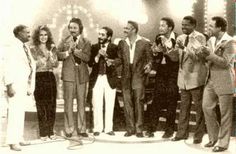
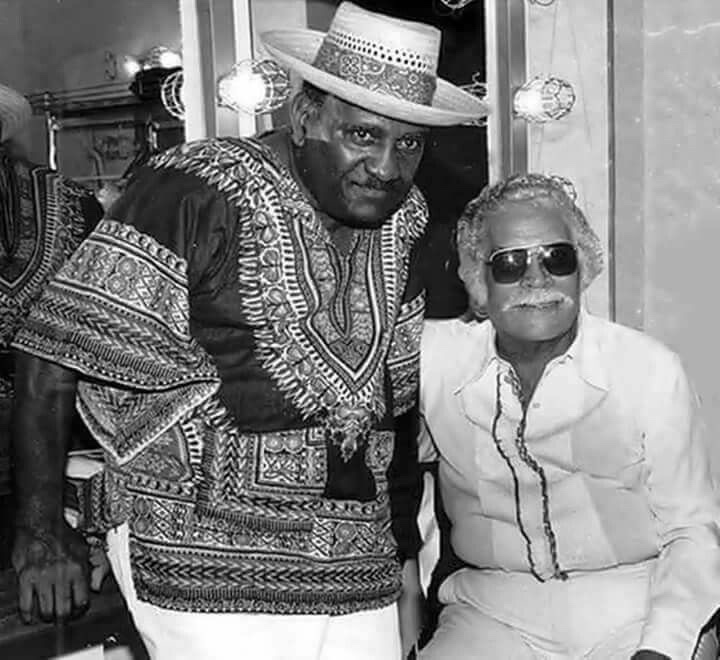
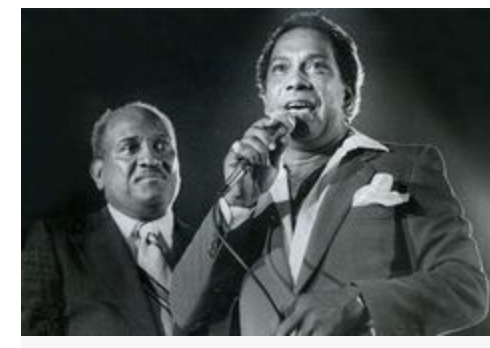
 Tite Curet and his childhood friend Daniel Santos
Catalino Curet Alonso was born on February 12, 1926 in Hoyo Ingles, Guayama, Borinquen (Puerto Rico). His mother was a seamstress and his father was a Spanish language teacher and musician for Simon Madera’s band. He inherited his father’s love and passion for music. His father played trombone and trumpet in Madera’s band.
At one and a half years old Tite, his mother and sisters moved to Barrio Obrero (the Worker’s District), Santurce. There he befriended Ismael Rivera, Rafeal Cortijo and Daniel Santos. They remained lifelong friends. Tito Rodriguez was also born there. Young Tite would often go to see Rafael Hernandez, another great Puerto Rican composer. Pedro Flores and Tito Enriquez also lived nearby and Tite would often see them. Hernandez and Flores both were inspirations and influenced him as a composer. Tite wrote his first song at the age of 15 and never stopped writing songs. His experiences while living in Barrio Obrero were included in many of the songs he composed, as well as the racism he faced. In many of his songs, he focused on the beauty of Black Boricuas, the poverty and conditions in Boriquen, and his love for Borinquen. Cheo Feliciano says, “It wasn’t normal at the time he began doing it, but he always talked of what it meant to be black, and he had the courage to say he was proud of who he was.”
His daughter, Hilda, rememers him here in the next quote, “Dad was always writing songs, at home and out on the street, from sunrise until he went to sleep. He carried a notebook with him almost everywhere he went, but I even saw him write on napkins, and I can also remember him walking around the house, waving his hands as he sang lyrics or scatted a melody into a tape recorder.”
“Any joke he heard, two hours later he’d have written a song with the punch line as the title.” remembers Rafael Viera Figueroa, an owner of a record shop Tite frequented.
Ruben Blades says, “I wish now, looking back, that I had asked him more questions, because he had a lot to teach. Tite wrote songs that were directed not just at the feet but also at the mind. That man loved music and culture and words and ideas, and talking about all of those things. In spite of the fact Tite was often depicting a harsh barrio reality, he wrote with an elegance of words and imagery, with lyrics that could be very poetic and cosmopolitan. He was just exceptional in every way.”
Tite left college and did not finish until much later. He became a mailman to support his three sisters and mother. He held this job for 37 years. Tite says, “I left my studies because the Post Office offered a steady paycheck every two weeks. I had three sisters I had to support. I didn’t go back to college until later in life. My uncle was a journalist and he used to take me to the newspaper. I saw the printing presses. So I became a journalist. I loved it. The lyrics of my songs resemble the news.” Pp 24. Salsa Talks- A Musical Heritage Uncovered, Mary Kent. After he got his first paycheck from the post office, he told his mother, he did not want to see her at the sewing machine again.
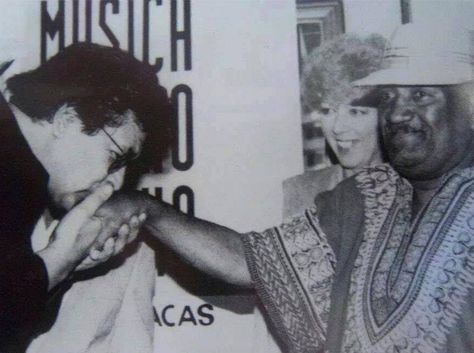
He moved to New York in 1960 and in 1965 the King of Pachanga Joe Quijano, recorded one of Tite’s songs. Tite then began to write songs for La Lupe. He wrote La Tirana for her, it became a huge hit for her, 2nd, only to Que Te Pedi. He not only wrote the perfect song for her, but studied how she sang and how she hit notes to write the perfect song.
After writing for Lupe, many singers and musicians were coming to him for songs. He then composed some famous songs for Santos/Santito Colon. However in 1965 Tite stopped writing songs and did not continue until 1968, he was experiencing a very destructive battle with alcohol. Here he remembers that sad time, “. . .I didn’t write anything until 1968. I was leading a very sad life as an alcoholic and on January 10th, 1965, I quit drinking.”From Salsa Talks- A Musical Heritage Uncovered, Mary Kent. Pp 25.
La Tirana was a song, like Cheo said, was custom made for the singer. This song suited La Lupe’s style and personality perfectly, instead of the usual lines of other boleros she had sung, that asked for forgiveness, expressed pain and begged her love to return, this song is about a woman who says that “the day you left, was the day I won.”
After this she had Tite write Puro Teatro. Another song of a rebellious woman who sees through false apolgy and lies.
Puro Teatro, La Lupe. Composed by Catalino ‘Tite’ Curet Alonso.Just like in a sceneyou pretend your cheap painyour drama in unnecessaryI already know this playLying, how well the role fits youAfter everything it seemsthat this is your true formhttps://lyricstranslate.com/en/puro-teatro-pure-theater.html
Igual que en un escenarioFinges tu dolor baratoTu drama no es necesarioYa conozco ese teatroMintiendo que bien te queda el papelDespués de todo pareceQue es tu forma de serLa Gran Tirana, La Lupe. Composed by Catalino ‘Tite’ Curet Alonso.To me it makes no differenceWhat comments you makeIf the same people sayThe day that I left youWas the day that I wonThe day that I left youWas the day that I wonhttps://lyricstranslate.com/en/la-gran-tirana-great-tyrant.html
Para mí es indiferenteLo que sigas comentandoSi dice la misma genteQue el día en que te dejéFui yo quien salió ganandoQue el día en que te dejéFui yo quien salió ganando
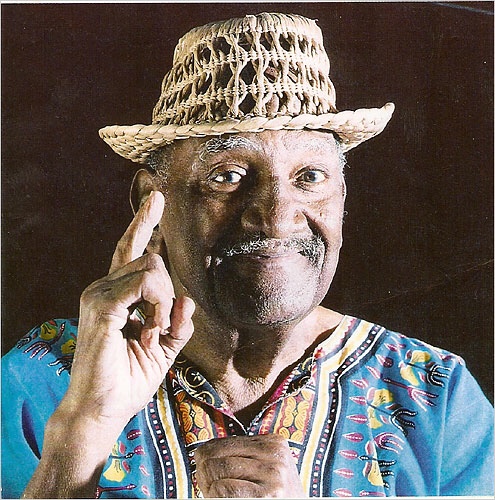
Tite also wrote songs exceptionally fast. He wrote almost every song on Cheo Feliciano’s first solo album, ‘CHEO’, in 2 days. 9 songs in 2 days. “We were supposed to record ten songs and we only had nine. I called Tite and told him we were short one song. He asked me if I wanted a bolero or a salsa tune. I told him I wanted a bolero. He told me he didn’t have any idea at the moment, but that he would see me within thirty minutes. He got on a bus, and during the ride from where he was, to where I was, which was about thirty minutes, he composed Mi Triste Problema,” remembers Cheo Feliciano.
Tite composed a song for Celia Cruz, called Isadora. He composed the song in 30 minutes after someone gave him a book about the dancer. Celia Cruz’s first album with Fania Records, Celia & Johnny, also has song composed by Tite called ‘Tengo El Idde.
When Tite was asked what he thought of the term Salsa, he answered simply, in a rather comedic way, “Salsa is Cuban in origin, but remember the English invented boxing, but they do not have all the champions.“
Tite met Cheo Feliciano in the mid 1960’s, here Cheo recalls when they met in Puerto Rico, “A mutual friend in New York told me, ‘when you go back to Puerto Rico, you have a friend called Tite Curet Alonso. He is going to do a lot of things for you.’ Tite admired me very much. When I met Tite in Puerto Rico, I was still doing drugs in the street. He used to give me all kinds of advice. He’d tell me, ‘Cheo get away from that, you’ve got many things to do, I have many things for you.’ We established a friendship. He was one of the few people that didn’t turn his back on me, he too had personal problems and overcame them, so he told me, ‘If I did it, you can do it.’ I said ‘yeah, maybe one of these days’. Pp. 101 of Salsa Talks- A Musical Heritage Uncovered, Mary Kent.
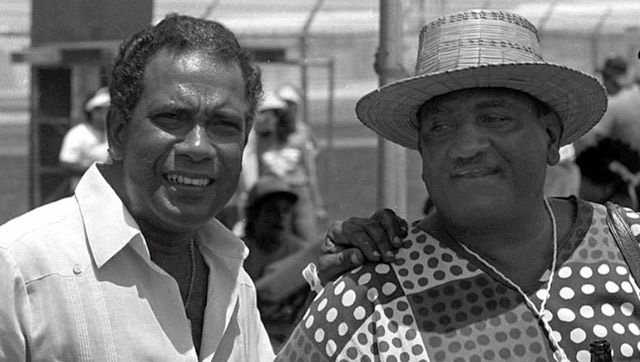
Tite also remembers meeting Cheo and developing a friendship with him in an interview with Mary Kent for her book, Salsa Talks- A Musical Heritage Uncovered. “I met Cheo years earlier in New York, when he was with Joe Cuba. But I noticed Cheo was already a little high on drugs. I scolded him ‘what you are singing about is nonsense, because you are sidelining the subject matter. The song is about a girl and you are suddenly improvising about a bongo.’ He understood what I was saying. Then we didn’t see each other for some time. Then they brought Joe Cuba’s albums and Joe Cuba to Puerto Rico. When I saw Cheo in bad shape, I told him, ‘If you need money, I can give you some. I don’t like to see you begging in the streets like this. You can’t go on this way!’ He told me he wanted to feel a sense of accomplishment again. He checked himself into Hogar Crea (a drug rehabilitation center in Puerto Rico). I had written the whole album, including Anacaona, in two days. We took all the music and Bobby (Valentin) wrote all the arrangements. When Bobby was done three weeks later we went to New York. . . The next day, we were recording there. Anacaona was such a big hit it sold about 142 thousand copies.” Pp26 Salsa Talks- A Musical Heritage Uncovered, Mary Kent.
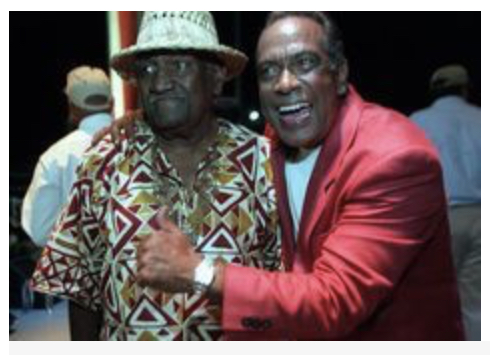
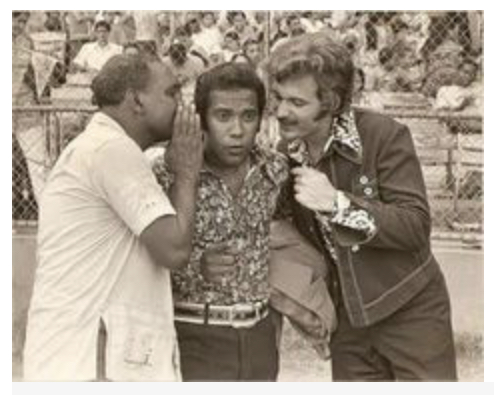
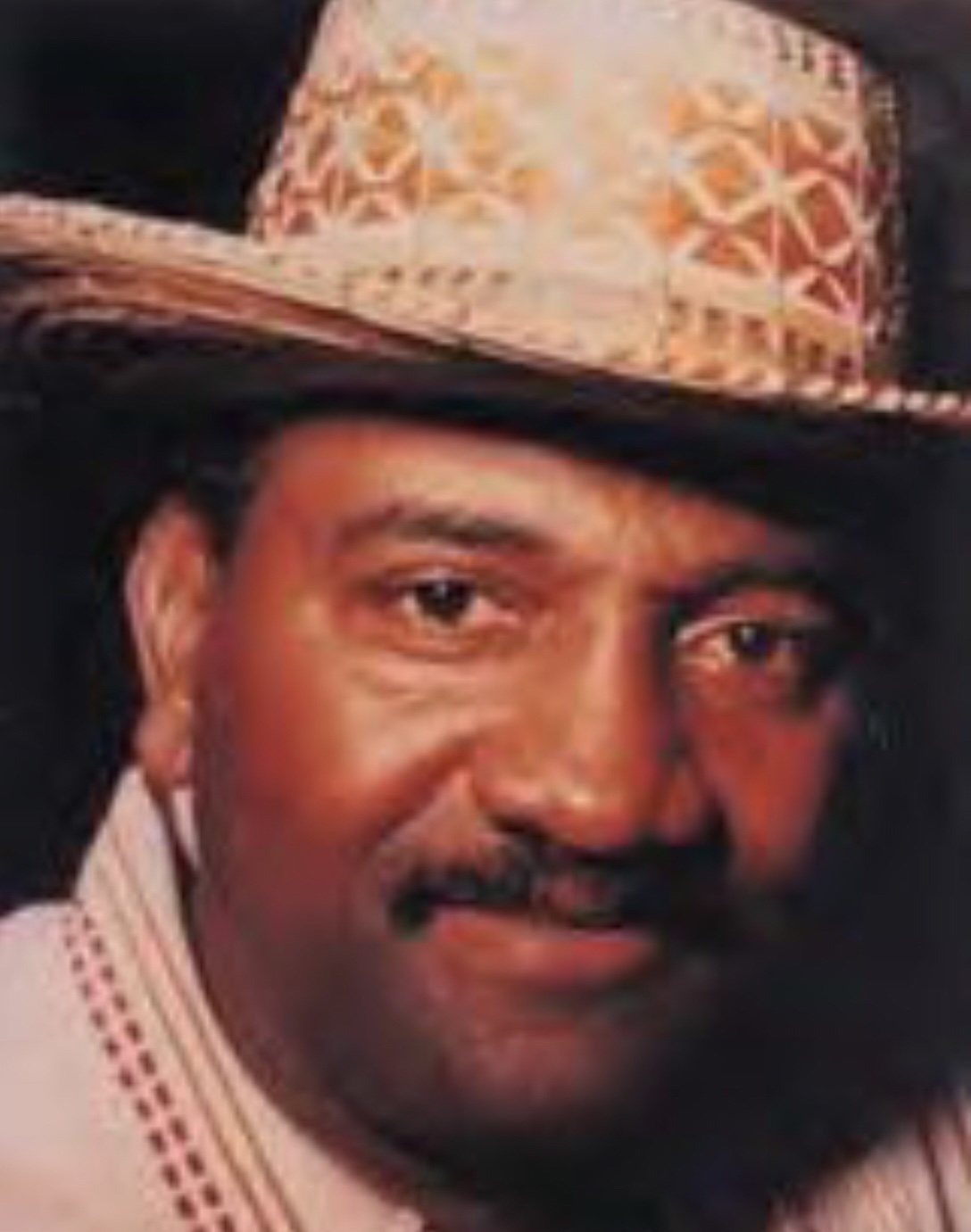
Tite applied his degree in journalism to the way he analyzed singers and wrote his songs. He says, “When I wrote ‘La Tirana’ for La Lupe, I came prepared with the smarts from journalism to write that song. I write fire to elicit an effect. I study the singer’s style: how he sings, if he is good with his vowels or his consonants; the way he pronounces and if he is credible when he sings what I write for him, because if he isn’t, he cannot interpret anything from his heart.” And “What influences me from journalism is human life, the news. It is a daily occurrence. To say there is no news today is impossible. The news influenced me greatly in my lyrics.”From Pp 24-25 of Salsa Talks- A Musical Heritage Uncovered, Mary Kent.
However Tite received so little of the royalties from the succesful albums that starred his songs due to the trickery of many record companies. His royalties were so low that he worked as a mailman to survive and support his family. He held this job for more than 37 years and also worked for the newspaper El Dairo due to his degree in journalism and sociology.
Sue Steward, author of Salsa, The Rhythm of Latin America, talks about Tite not receiving the royalties that were owed to him, in her book. “The island’s leading songwriter, ‘Tite’ Curet Alonso, worked as a mailman and journalist in San Juan while his songs were in the charts all over Latin America. Like all Fania artists, he received no royalties, only fees.” Pp 64 Musica- The Rhythm of Latin America, Sue Steward.
At one point, when Tite discovered that he was being tricked out of his royalties, his music was banned from Puerto Rico by ACEMLA who had stolen hundreds of his songs, despite his huge popularity on the island. The ban included all of the hit Salsa songs that were on top charts at the time. The ban was even extended to albums with Tite’s songs. Then all musicians who sang his songs were ban. This was ACEMLA’s attempt to erase Tite’s name from Puerto Rico. Tite’s family is still engaging in a legal battle with ACEMLA over the royalties he should have received from hundreds of songs. However not only by ACEMLA, Fania’s Jerry Massuci tricked Tite out of royalties as well. According to Cheo Feliciano, Tite is owed 3 to 5 million dollars by various record companies. “The only problem with money is that it is necessary. I don’t want to take the record company’s money; I just want the money they owe me. I am grateful to Jerry Masucci for launching my career, for supporting me. But he has to pay me what he owes me, because I produced for him, making him a millionaire,” says Tite. Pp 26-27 from Salsa Talks- A Musical Heritage Uncovered, Mary Kent.
Cheo Feliciano was one of the musicians temporarily ban from Puerto Rico because he sang his bolero Enfandos on his 1993 Motivos album. Cheo says, “All the hits of the 60’s, 70’s and 80’s were practically his songs. It didn’t matter who sang them. All of the big hits were Tite’s. And all of a sudden that voice is silenced. He tells me that he continues composing and that he knows that no one can record his songs for fear of reprisals. If you record one of his songs it will not be played on radio as a result of the boycott. He tells me that he is sure that in this stage of his life he will receive what he is seeking. And it’s a lot of money. He feels that maybe when this is all over his music will once again be heard. In the meantime he is writing his memoirs, as well three books of poetry. He says that he cannot compare that to the two, three, four, or five million dollars that are at stake. If that is the case I feel that he has every right to pursue his quest. I just hope that the money the world owes Tite reaches his hands before he passes on so that he can enjoy his life. Que se lo den en vida like the song states. If he deserves it, then those in power should see to it that he gets it. He should get to enjoy it before he passes on.”From an interview at JazzconClave.com
Jerry Masucci was stealing and cheating almost all of the Fania musicians and composers out of the royalties they were owed, this is corroborated by Larry Harlow, Ruben Blades and Cheo Feliciano, among others. Larry Harlow says, “I knew a woman who had a little record shop in Panama half the size of this room. I said ‘How many ‘Salsa’ albums did you sell here?’ She said ‘Twenty five thousand in this little store.’ This was a year after it was out and I came back and I got a statement from my record company (Fania). All totaled, it said I sold twenty thousand in the world.” Pp 147 from Salsa Talks- A Musical Heritage Uncovered, Mary Kent. This is clear evidence that Masucci was cheating everyone out of their royalties. Ruben Blades took the case to court, however many others, like Tite, could not afford to fight court cases.
In some of Tite’s songs, such as the song Anacaona (link) he writes about Taino history. Anacaona was a Taino Cacica of Kiskeya (now the Dominican Republic). Anacaona means golden flower, Ana meaning Flower and Caona meaning gold or golden. Anacaona and 80 other Caciques were called to a meeting with the Spaniards in 1503. The Spaniards then set the building, they had all gathered in, on fire. Anacaona and many of the other Caciques escaped but were captured. Anacaona was hung while the other Caciques were shot. The lyrics of Anacaona show Tite’s consciousness of Taino History and his consciousness of Anacaona’s resistance.
Anacaona I heard your voice, as you cried.
Anacaona I heard the voice of your anguished heart,
your freedom never arrived.
But the India who dies crying, dies,
but does not forgive, does not forgive, no.
However Anacaona was not the only song that Tite wrote about a Taino Cacique. Tite also composed a song called Caonabo, who was another Taino Cacique of Kiskeya (Quiskeya, the Dominican Republic). This is recorded with Tite singing, however never became popular because of a lack of promotion.
‘La Abolicion’, was a song written for Pete ‘El Conde’ Rodriguez, this is a song that shows even more of Tite’s consciousness, he writes “the abolition of slavery does not mean freedom.”
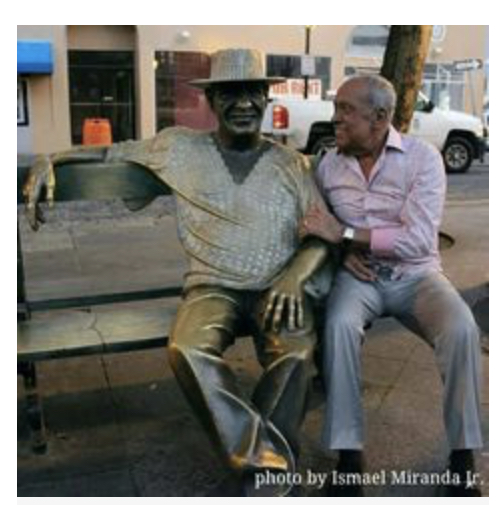
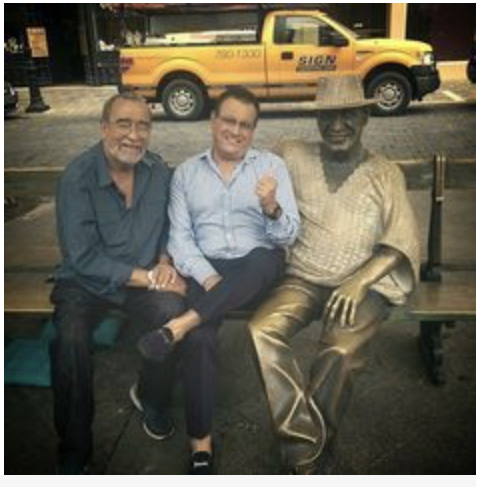
There is a bench in San Juan with a bronze statue of Tite in one of Tite’s favorite places to write songs. Tite would sit there for hours writing and talking to people.
Tite died on August 05, 2003 of respiratory failure and a heart attack in Baltimore, Maryland. (His daughter still lives in Baltimore). Before the funeral procession reached the cemetery, some of Tite’s closest friends and family, (including Ruben Blades and Cheo Feliciano), took his coffin out of the hearse and carried him to the cemetery. Similar to the funerals’ of Rafael Cortijo and Ismael Rivera. He is buried in the Santa Maria Magladenna de Pazzis Cemetery in Old San Juan.
Tite’s songs were, and continue to be, influential in the world of Latin music and Salsa. However, his name is rarely heard. His name is notably lacking in many of the documentaries on Salsa and Latin Music, even though the documentaries most likely speak of popular salsa songs he wrote.
I dedicate this article to Tite and his family. May Tite never be forgotten. He is alive when his music is alive, keep Tite’s music alive and keep his memory alive. And may Tite’s family achieve the justice they are seeking for Tite and his music. May Tite continue to bless and guide his family from the world of the ancestors. I would also like to dedicate this to the memories of Cheo Feliciano, Ismael Rivera, Rafael Cortijo and others who have since passed on to the world of the ancestors, that loved Tite very much.
HERE ARE LINKS TO SOME OF TITE’S BEST AND MOST POPULAR SONGS.
Cheo Feliciano
La Lupe
Pete ‘El Conde’ Rodriguez
Santos Colon
Hector Lavoe
Celia Cruz
Tito Rodriguez
 Voice of the Water Lily

Pingback: S1 .Ep25 Remembering Tite Curet Alonso on his 96th birthday – Voice of the Water Lily
Pingback: Song of the week: La Perla by Ismael Rivera – Voice of the Water Lily
Pingback: The Story of Anacaona. – Voice of the Water Lily